Cervical spine injuries need fast, careful care. A fracture or dislocation in the neck can threaten the spinal cord, so surgeons need tools that align and stabilize the spine with steady control. For decades, the crutchfield tongs cervical traction device has served as a dependable medical instrument for this critical task.
What Is Crutchfield Tongs Cervical Traction?
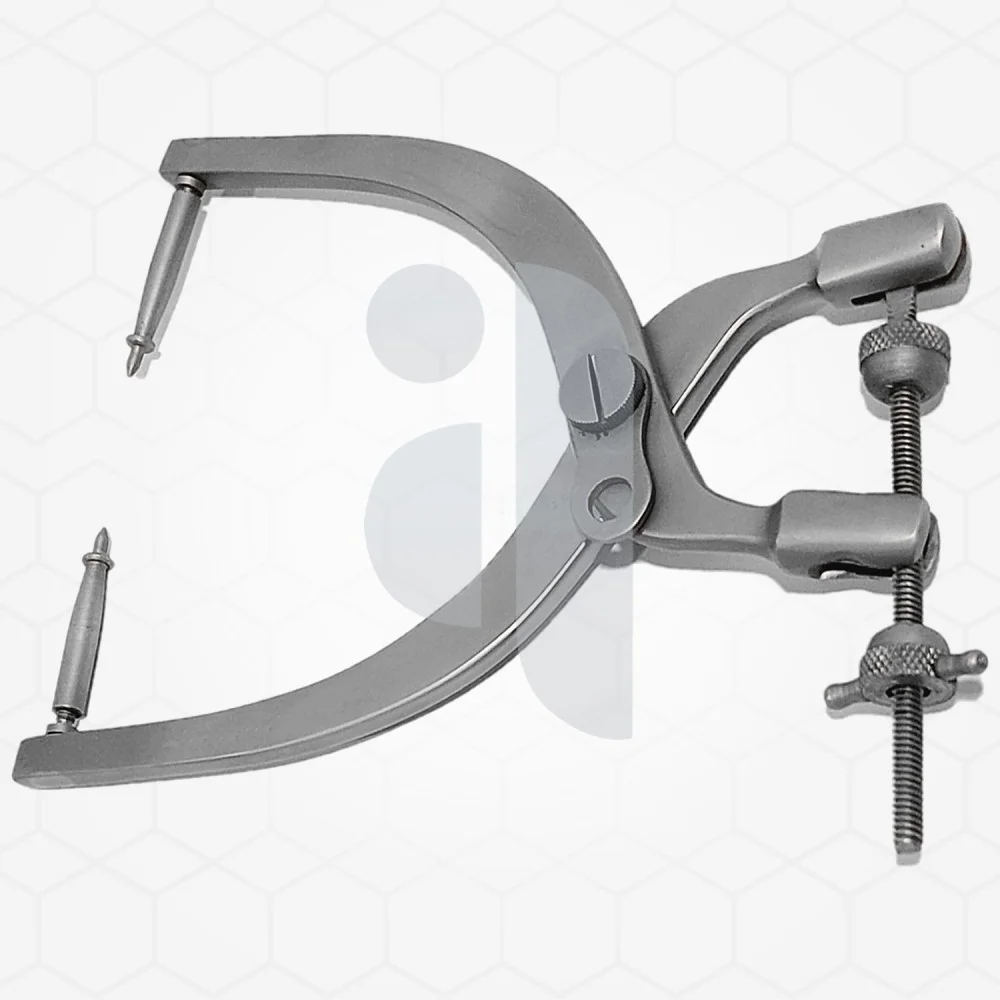
The crutchfield tongs cervical traction system is a skeletal traction instrument used to stabilize and realign the cervical spine. Dr. William Gayle Crutchfield introduced the design in 1933, and it quickly became an important tool in neurosurgery and orthopedics. The tongs have two curved arms with pointed tips that anchor into the outer layer of the skull. Once secured, a rope and pulley connect the tongs to weights, which apply gentle, continuous traction to the neck.
Design Features That Support Safe Traction
A well-made crutchfield tongs cervical traction instrument balances strength with precision. Its caliper-style frame holds the pins at the correct angle, and an adjustment mechanism lets the surgeon set a firm, even grip. The tips only penetrate the outer table of the skull, which helps protect deeper structures. This careful design allows steady pulling force while limiting stress on the patient and lowering the risk of slippage.
Clinical Uses in Spine Care
Surgeons use crutchfield tongs cervical traction to reduce fractures and dislocations of the cervical vertebrae. Traction helps restore normal alignment, ease pressure on the spinal cord, and keep the neck still before or after surgery. It can also support healing in selected cases where surgery is not the first choice. Because the device provides controlled and adjustable force, the medical team can raise or lower the weight as the patient's condition changes.
Why Material Quality Matters
Every crutchfield tongs cervical traction set should be made from high-grade surgical stainless steel. Quality steel resists corrosion, keeps its shape under load, and holds up through repeated sterilization. A poorly made instrument may loosen, bend, or lose tip sharpness, which can affect pin stability and patient safety.
Choosing AzeeMed as Your Trusted Supplier
AzeeMed focuses on making surgical instruments of the highest quality for the medical community around the globe. With more than two decades of experience, we know the strength and accuracy spine surgeons expect. Each bailey forceps instrument we produce reflects careful craftsmanship, precise alignment, and a secure grip.Our range extends far beyond spine care.
Conclusion
Stabilizing an injured neck calls for an instrument you can trust. Crutchfield tongs give surgeons a secure anchor, adjustable force, and the control needed to protect the spinal cord during recovery. By choosing AzeeMed, you gain precision-crafted instruments, over twenty years of expertise, and solutions across many surgical specialties.
Comments