Card games have existed for over a thousand years, but few have achieved the universal reach of solitaire. Played by millions every single day across phones, browsers, and desktops, solitaire is arguably the most recognizable card game in human history. Yet most players who shuffle their virtual decks have never paused to ask where this game actually came from. The story behind its invention is older, richer, and far more fascinating than most people expect.
When Was Solitaire Invented and Where Did It Begin?
The question of when was solitaire invented does not have a single clean answer. Most card game historians trace its earliest documented origins to Northern Europe — specifically Scandinavia and Germany — somewhere around the late 1700s. The first written references to solitaire-style games appear in German game anthologies from around 1783, making the game well over 200 years old.
From Northern Europe, the game traveled west into France, where it gained enormous popularity during the late 18th and early 19th centuries. The French called it "Patience," a name still widely used across Europe today. The word itself reveals something meaningful about how early players understood the game — it was not just a card game but a test of composure, focus, and deliberate thinking.
The French Parlor Era Gave Solitaire Its Identity
French nobility embraced solitaire as an elegant indoor pastime. It spread through aristocratic parlors and eventually into middle-class homes, becoming a staple of quiet leisure across the continent. During this period, the game developed most of the structural rules that modern players still follow — tableau columns, foundation piles, stock piles, and sequential card building.
What Made Early Solitaire Different From Today
- All moves were permanent — no undo button existed
- Players used physical decks, requiring full concentration and card memory
- Losing a winnable deal meant accepting the outcome with no replay option
- Rules varied by region, with dozens of local variants emerging organically
Did Napoleon Bonaparte Really Popularize Solitaire?
One of the most persistent stories in solitaire history connects the game to Napoleon Bonaparte. According to popular legend, Napoleon played solitaire obsessively during his exile on the island of Saint Helena between 1815 and 1821. Some accounts suggest it was his primary source of entertainment during those final years.
Whether or not Napoleon was a devoted player, the association stuck. His exile coincided with a period when solitaire was spreading rapidly across Europe, and the Napoleon connection gave the game a certain cultural prestige that helped accelerate its popularity.
Separating the Myth From the Historical Record
Historians debate how much of the Napoleon story is fact versus romantic legend. What is documented is that solitaire was already well-established across Europe before his exile. Napoleon did not invent the game, and he likely did not even introduce any new variants. However, his association with solitaire — real or embellished — helped cement it as a serious and respectable pastime rather than a trivial distraction.
Other Famous Historical Figures Linked to Solitaire
- Prince Albert of Saxe-Coburg and Gotha was reportedly fond of patience card games
- Leo Tolstoy mentioned card solitaire in his personal writings
- Various European monarchs used patience games as a form of mental relaxation during the 19th century
How Did Solitaire Reach the Rest of the World?
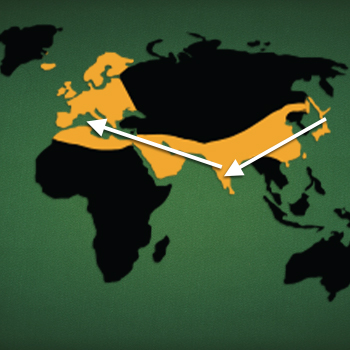
The history of solitaire beyond Europe accelerates dramatically in the 19th century. British colonists and travelers carried card games — including various patience formats — across the globe. The game reached North America, Australia, and parts of Asia through trade routes and colonial networks.
In the United States, the game became known as "Solitaire" rather than "Patience," a naming distinction that persists to this day on either side of the Atlantic. American players developed their own variants, and by the early 20th century, solitaire was a household word across the English-speaking world.
The Klondike Connection and the Gold Rush Era
The most widely played solitaire variant today — Klondike Solitaire — is believed to have gained its name from the Klondike Gold Rush of the 1890s in Canada's Yukon Territory. Miners enduring long, isolated winters reportedly played the game to pass time, and the variant they favored eventually took on the regional name.
Why Klondike Became the Default Solitaire Format
- Simple rules made it easy to learn with a standard 52-card deck
- The game required no partner or opponent
- It was portable, requiring only a flat surface and a deck of cards
- The challenge-to-reward ratio kept players engaged for hours
How Did Microsoft Change the Entire Trajectory of Solitaire?
No single moment in solitaire history is more significant than 1990. That year, Microsoft included Solitaire as a built-in application in Windows 3.0 — and the game was never the same again.
The decision was not purely about entertainment. Microsoft engineers included solitaire to help new computer users become comfortable with the mouse. Dragging and dropping cards taught users cursor control, click timing, and interface navigation without the intimidation of a technical tutorial. It was a genius piece of user experience design disguised as a card game.
The Windows Era Turned Solitaire Into a Global Phenomenon
Within years of the Windows 3.0 release, solitaire became the most-played computer program on earth. Office workers played it during lunch breaks. Students played it in computer labs. Families gathered around desktop screens to watch games unfold. The different types of solitaire — including Spider Solitaire and FreeCell, added in later Windows versions — expanded the audience even further.
The Scale of Solitaire's Digital Reach by the 2000s
- Estimated billions of games played annually on Windows alone
- FreeCell and Spider Solitaire developed dedicated global player communities
- Solitaire became a cultural shorthand for computer leisure worldwide
Where Does Solitaire Stand in the Modern Era?
Today, players no longer need a Windows PC to enjoy the game. Browser-based platforms allow anyone to play online solitaire instantly without downloading anything. Mobile apps have made the game available in every pocket, with polished interfaces, daily challenges, and multi-variant libraries.
The best spider solitaire app platforms now offer one-suit, two-suit, and four-suit difficulty modes alongside detailed statistics tracking, helping players measure genuine skill improvement over time. The game has traveled from 18th century European parlors to the screens of billions — and it shows no signs of slowing down.
The Verdict
Solitaire was invented in the late 1700s in Northern Europe, refined in French parlors, romanticized through its Napoleon connection, standardized during the Klondike Gold Rush era, and then catapulted into global dominance by Microsoft in 1990. Each era left its mark on the game we play today.
Understanding the history of solitaire makes every hand feel like a small connection to centuries of human leisure, patience, and strategy. The next time you deal your cards — physically or digitally — you are participating in a tradition that has outlasted empires.
Comments